Planning a Great Migration safari in the Masai Mara sounds straightforward. Book July through October. Show up. Watch wildebeest cross the Mara River while crocodiles attack. Go home with incredible photos.
If only it worked that way.
The best African safari destinations marketing makes everything look perfectly timed and guaranteed. Reality involves more uncertainty, more waiting, and yes – more vehicles than you probably imagined. This guide covers what the glossy brochures conveniently leave out.
Timing Isn’t What You Think
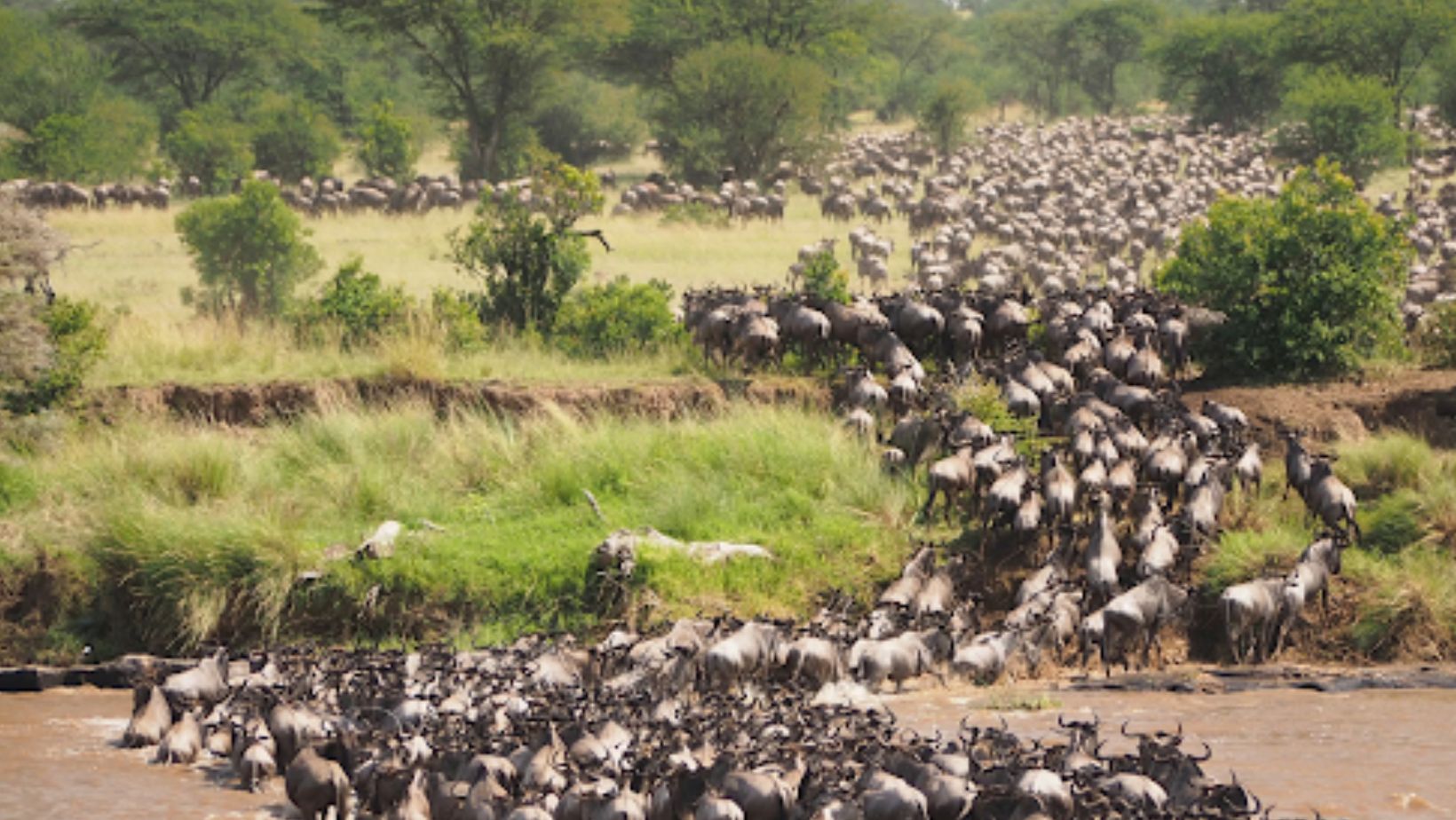
The migration operates on its own schedule. Weather patterns, rainfall, and grass growth determine where 1.5 million wildebeest move – not your vacation dates.
Agnes Nyaguthii, a KPSGA-licensed guide with over a decade of experience, explained it bluntly during a recent crossing: the animals don’t read itineraries.
Peak season runs July through October. That’s accurate. But “peak season” means peak crowds too. In 2025, over 150 vehicles converged on a single crossing point, blocking animal movement and creating chaos. The wildebeest panicked. Some turned back. Tourists who’d traveled thousands of miles watched a failed crossing because of vehicle congestion.
The best time to visit Masai Mara for safari depends on what you’re willing to accept. August offers the highest probability of crossings but also the densest crowds. September provides better odds of witnessing the drama with fewer vehicles. October catches the return migration south – less famous but equally dramatic.
The Crossing Problem Nobody Mentions
River crossings don’t happen on demand. Herds gather at the bank for hours. Sometimes days. They test the water, retreat, test again. A single zebra startles and thousands scatter. Your guide can position you at a crossing point at 6am and you might wait until 4pm before anything happens. Or nothing happens at all.
One family I know booked a four-day migration safari specifically for crossings. They saw zero. The herds were there – grazing on the opposite bank, drinking from the river – but never crossed during their visit. They felt cheated. They shouldn’t have. That’s simply how migration works.
The solution? Book at least four nights if crossings matter to you. Three nights is the minimum most operators recommend, but it’s genuinely a gamble. The Masai Mara National Reserve spans a massive area. Herds cross at different points on different days.
What You’ll Actually Spend
Let me break down realistic 2026 costs.
Park Fees: The main reserve charges USD 200 per adult per 12-hour period during peak season (July through October). Low season drops to USD 100. Children pay reduced rates. These fees are separate from your safari package.
Safari Packages: Budget options start around USD 350 for three days including shared transport and basic accommodation. Mid-range runs USD 500-800 for the same duration with better lodges and semi-private vehicles. Luxury packages exceed USD 1,500. The difference shows up in vehicle quality, guide experience, and accommodation proximity to prime crossing points.
Flights: Internal flights from Wilson Airport in Nairobi to the Mara cost USD 150-300 one-way depending on the airstrip and timing. Road transfers take 5-6 hours and cost less but the final stretch gets rough – one traveler described the last 60 minutes as “spine-rearranging.”
Hot Air Balloons: USD 450-550 per person including champagne breakfast. Worth it for aerial views of the herds. Book ahead because these sell out during peak migration weeks.
Things I Wish Someone Told Me
The smell stays with you.
Nobody prepares you for the sensory reality of the migration. The air near crossing points carries a particular mix – wet earth, animal sweat, and something metallic from the blood where crocodiles have made kills. It’s not unpleasant exactly. It’s primal. You won’t forget it.
Early mornings are cold.
The Mara sits at 1,500 meters elevation. July and August mornings hover around 10-12°C (50-54°F). Pack layers. Your game drive starts at 6am and open-sided vehicles offer zero protection from wind.
The Nairobi connection matters.
Most travelers transit through Nairobi National Park or spend a night in the city before heading to the Mara. This park sits just 7 kilometers from downtown – you can photograph lions with skyscrapers in the background. Entry costs USD 80 per adult via the official KWS website. If your schedule allows, it makes a worthwhile half-day addition.
Conservancies change everything.
The main reserve gets crowded. Private conservancies surrounding it – Mara North, Naboisho, Olare Motorogi – limit vehicle numbers and guest capacity. They permit night drives and walking safaris that the reserve prohibits. Accommodation costs more but the experience differs dramatically. One visitor described going an entire game drive in a conservancy without seeing another vehicle during peak migration season.
When Things Go Wrong
A client’s story worth sharing: Their internal flight from Nairobi got cancelled due to weather. The backup road transfer took seven hours instead of five because rain had turned sections into mud. They arrived at camp after dark, exhausted, having missed their first afternoon game drive.
The operator adapted. They extended the final morning drive and refunded one meal credit. But the client still lost nearly a full day of their three-day safari.
The lesson: build buffer time into your itinerary. If you’re flying internationally into Nairobi on Monday, don’t book a Mara flight for Tuesday morning. Weather happens. Connections fail. Domestic airlines in Kenya operate on flexible schedules.
Realistic Expectations
Will you see the migration? Almost certainly, if you visit July through October. Wildebeest will be somewhere in the Mara ecosystem during these months.
Will you see a river crossing? Maybe. The probability increases with longer stays and strategic lodge positioning. But crossings aren’t guaranteed on any given day.
Will you see predators hunting? Likely. Lions, cheetahs, and crocodiles take advantage of the migration buffet. The sheer abundance of prey during these months means predator activity peaks.
Will you have the experience to yourself? No. This is one of the world’s most popular wildlife events. Accept that other vehicles will be present, especially at major crossing points and predator sightings.
Practical Booking Advice
The wildlife in Masai Mara includes all Big Five species plus cheetahs, hippos, and over 450 bird species. Even if the migration disappoints, you’ll see remarkable wildlife.
Book 12-18 months ahead for prime accommodation near crossing points during peak August weeks. Lodges near the Mara River fill up fast.
Masaimarasafari.travel specializes in migration itineraries and can advise on timing based on current herd movements and historical patterns.
Frequently Asked Questions
How many days do I need for a migration safari?
Minimum three nights. Four to six nights significantly increases your chances of witnessing river crossings and exploring different areas of the reserve.
Can I see the migration on a budget?
Yes. Budget safaris around USD 350 for three days exist. You’ll share vehicles and stay in basic camps, but the wildlife doesn’t care about your accommodation tier.
What if I miss the crossings?
You’ll still see massive herds grazing and predators hunting. River crossings are the highlight, not the entirety of the experience.
The Great Migration remains one of Earth’s most remarkable wildlife events. Just go in knowing what the brochures skip – the uncertainty, the crowds, the waiting.
