
The writing tradition in Britain is still alive way beyond printed pages. In towns, valleys, and coastlines, locations of renowned storytellers welcome guests into the spaces that influenced memorable creations. Silent rooms, worn-out routes and well-kept artefacts enable the readers to feel how the writer’s imagination took shape. A visit to these places can be both an eye-opener about the creative life as well as a more enriched experience with the novels, poems, and plays that are recognised globally.
Culture and comfort go hand in hand when it comes to travel planning. Lots of readers plan their trips around libraries, galleries, and author residences and seek out boutique hotel deals that can position them near literary sites without losing the ambience. Blending relaxing experiences with purposeful sightseeing creates journeys shaped by both discovery and reflection.
Jane Austen’s Hampshire Surroundings
Chawton has strong ties to Jane Austen’s most prolific years and is situated softly amid rolling farmland. Her well-kept cottage is still full of furniture, letters, and personal items that shed light on the everyday lives behind famous novels. Her literature reflects pastoral vistas that are grounded in actual fields and hedgerows, as can be seen when strolling down local lanes.
Austen’s observations of social worlds outside the home are contextualised by nearby churches and villages. Her time spent here demonstrates how her astute observations of relationships, class, and manners were shaped by small towns.
Shakespeare and Stratford-upon-Avon
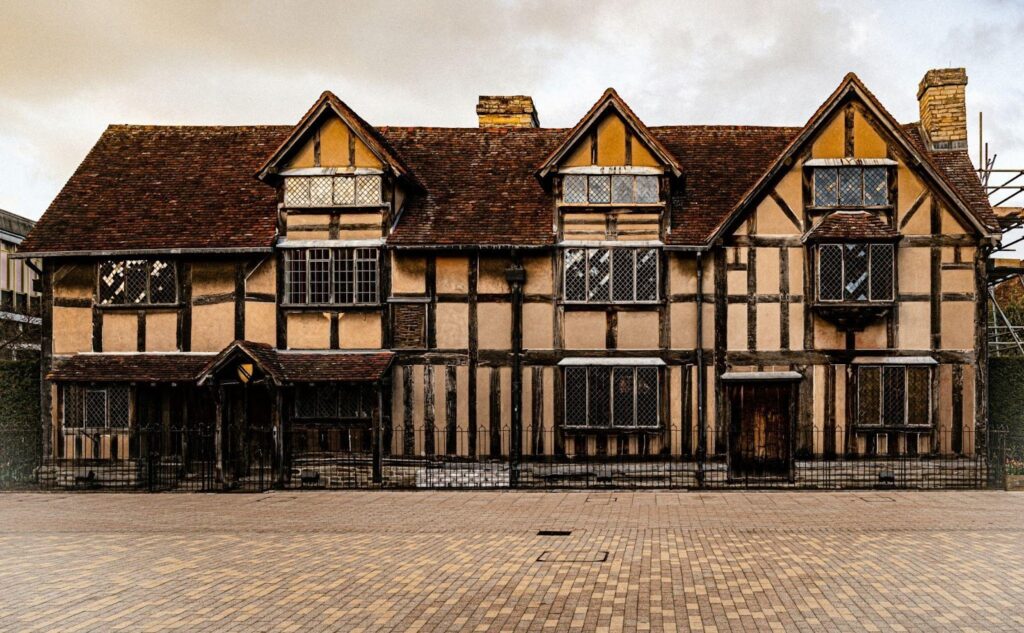
Stratford-upon-Avon shows the early life of William Shakespeare in detail. The furniture of the rooms where he was born depicts the conditions of his family during his childhood. A childhood to legacy story is finished with local places related to marriage, schooling and his last place of rest.
The neighbouring environment of Warwickshire provides more context. Market streets, meadows, and riverbanks are settings that recur frequently in his plays. The town’s theatrical productions uphold a custom that connects historical imagination with contemporary interpretation.
The Brontë Legacy in Yorkshire
Retaining the spirit of the Brontë family, Haworth stands strikingly against wide moorland. Manuscripts, apparel, and artwork that demonstrate a strong intellectual life in a remote location are preserved in their home. The intimate atmosphere of the rooms highlights how sibling rivalry and cooperation were shaped by close quarters.
Stepping out onto the nearby hills enhances one’s appreciation of books with a strong sense of loneliness and melancholy. The themes of love and resiliency that run throughout their writings are echoed by shifting skies and vast vistas.
Lake District Inspiration for Romantic Poets
The lakes and mountains of Cumbria provided a rich soil of Romantic ideas. At Wordsworth Dove Cottage, visitors have an opportunity to live in modest conditions, which promotes profound meditation. Examples of how the intensive study of nature inspired poetic expression include journals, gardens, and simple furniture.
Trails around Rydal and Grasmere showcase scenery that seems to have been altered by poetry. There are quiet moments when language and surroundings seem inextricably linked when strolling along these paths.
Dickensian London Streets
Charles Dickens offers a unique literary experience in London. His career growth in a city undergoing fast change is traced through former residences, conserved workplaces, and well-kept museums. Exhibits draw attention to societal issues that sparked compelling narratives about inequity and change.
Examining the areas he describes in his books gives well-known scenes more depth. The contrasts that characterised Victorian urban life are revealed by narrow alleys, river crossings, and busy markets.
Modern Voices and Coastal Retreats
The coasts of Britain served as a source of inspiration for later authors. Virginia Woolf’s ties to Sussex demonstrate a creative rebirth influenced by the sea and changing light. Her residences and the surrounding walking paths serve as examples of how the terrain encouraged experimental narrative techniques.
Another coastal effect can be seen in Cornish locales associated with Daphne du Maurier. Her tense pieces feature clifftops, harbours, and remote homes, demonstrating how setting may develop into a character unto itself.
Preserving Literary Places Today
There is a need to conserve these destinations. Trusts and museums strike a balance between conservation and access to the public with originality being preserved. Place-based experiences are encouraged in educational programmes to attract new audiences to literature.
A visit to such places turns reading into a physical and instant experience. Each journey connects story, setting, and personal interpretation, allowing literature to be experienced not only through words but through presence within the spaces that shaped them.
